Beyond data centres: Could fibre optic networks bridge the AI divide?

Key takeaways
-
AI can only reach its full potential if people have fast, reliable connectivity.
-
Without it, communities in ‘digital poverty’ risk falling further behind as AI adoption accelerates.
-
Fibre optic broadband networks provide the high capacity, low latency connectivity AI depends on.
-
IFM Investors believe the need to extend fibre coverage to hard-to-reach communities has created a compelling opportunity for infrastructure investors.
If you were asked to name a few standout inventions from the 19th century, you’d probably answer without much hesitation. The steam train, the light bulb, the telephone – all fundamentally changed the way people interact with one another and the world around them.
But a single invention cannot spark a revolution by itself. Great Britain only realised the steam train’s potential by building railways to connect people and communities in new ways. Likewise, Edison’s lightbulb was not as transformative as the electricity grid subsequently built to power it.
As AI adoption continues to accelerate globally, much of the public conversation has focused on data centres – particularly the power constraints that could slow AI’s growth. While these concerns are valid, for AI to be truly transformative it needs to be widely accessible, which cannot happen without high‑speed connectivity.
An often-overlooked part of the AI revolution, could fibre optic networks be the key to fostering digital inclusion in the age of AI?
Digital inclusion as a driver of economic growth
The relationship between digital connectivity and economic performance is well-established. In 2009, the World Bank suggested that:
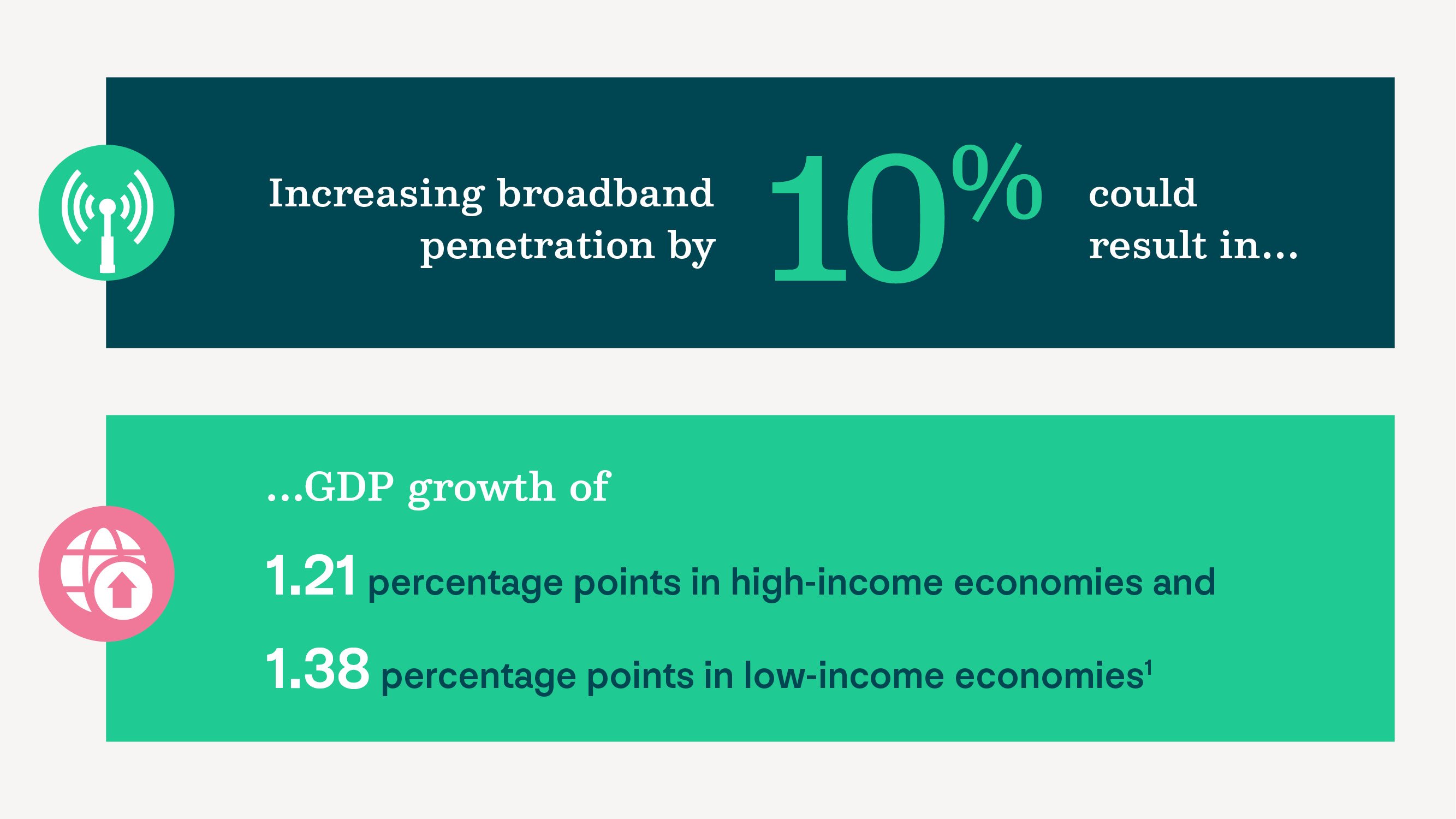
A lot has changed in the 17 years since, but this idea remains current. Communities living in ‘digital poverty’ often face other socioeconomic challenges – and by being excluded from the digital economy, these challenges are harder to overcome. Social exclusion and digital exclusion reinforce one another, creating an ‘inequality loop’.2
Digital poverty
Digital poverty has been defined as ‘the inability to interact with the online world fully, when, where, and how an individual needs’.3
The rise of AI risks exacerbating this, as certain people, organisations and countries are in a better position to reap the benefits of AI than others. The UN has already warned that infrastructure readiness is a prerequisite for inclusive AI adoption. Reliable internet, electricity and computing capacity are now as essential to development as roads and power grids.4
The emerging AI divide
The ‘AI divide’ is a relatively new concept, used to describe unequal access to AI tools and the benefits that flow from them. While this divide can exist between high‑ and low‑income countries, it can also emerge within advanced economies.
Source: Digital Poverty Alliance, ‘National delivery and advocacy plan 2025’.
As an infrastructure asset manager, IFM Investors believe fibre optic broadband networks play an important role in bridging the AI divide. That said, further investment is required to extend these networks to underserved areas.
How the UK’s fibre landscape evolved
The UK is one example of a country looking to achieve high-speed connectivity at the national level. Until the early 2010s, ‘last mile’ connectivity for most households still relied on copper lines. BT Group (through Openreach) and Virgin Media O2 dominated the landscape, controlling both infrastructure and consumer-facing broadband services.
As fibre‑to‑the‑premises (FTTP) became technologically and commercially viable, new full‑fibre entrants – or ‘altnets’ – began to challenge the incumbents. Ofcom – which regulates the UK’s communications industries – encouraged this, with initiatives like the Physical Infrastructure Access (PIA) framework designed to reduce deployment costs and accelerate fibre build-out.
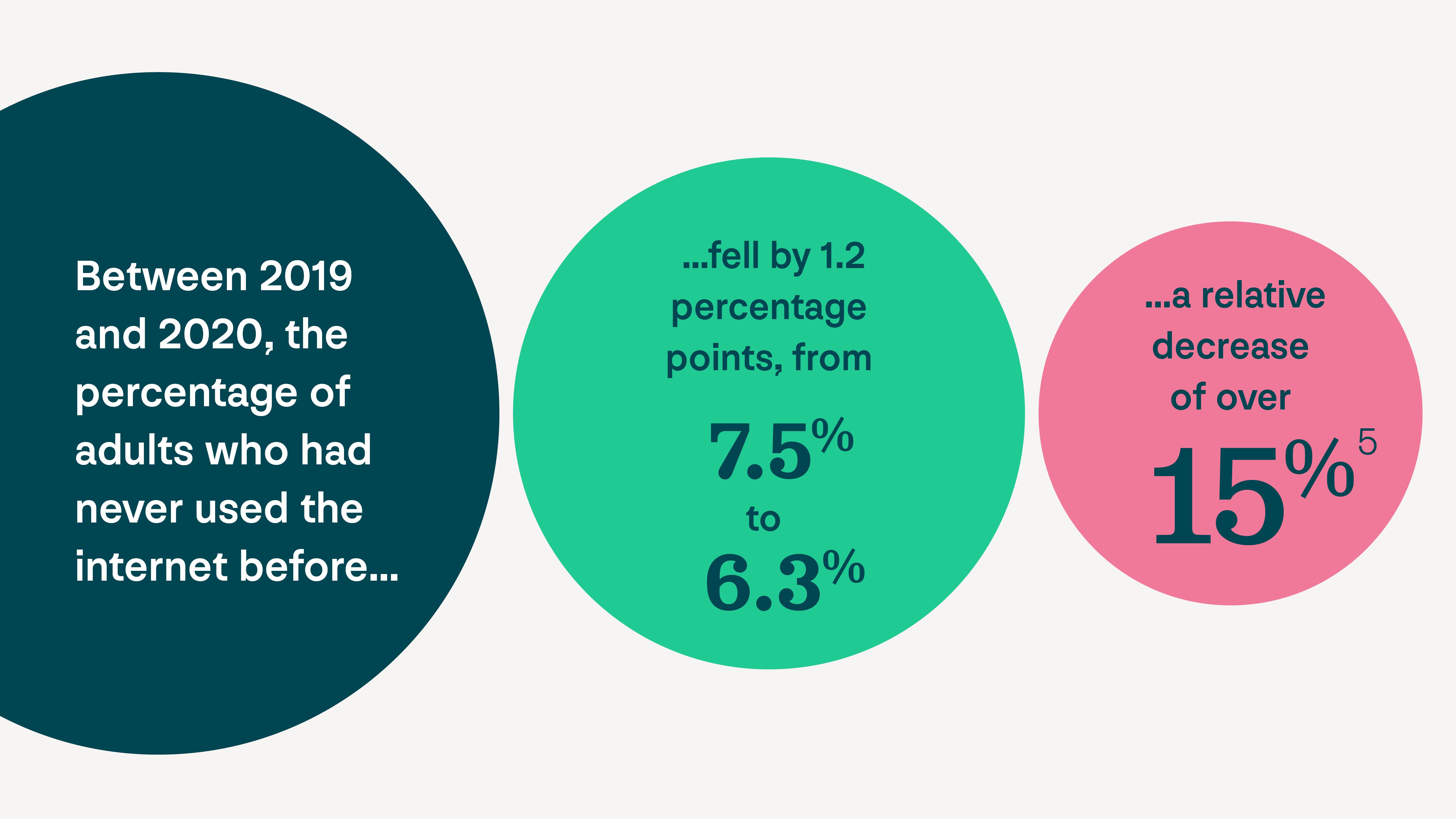
In 2020, as the COVID-19 pandemic pushed everyday life online, the number of UK altnets exploded. And while it is hard to directly attribute the altnet boom with alleviating digital poverty, the UK’s Office for National Statistics (ONS) has published data that seems to support this:
The UK fibre optic market is entering its next phase
The UK fibre optic market remains competitive, although we appear to be entering a period of shake-out. Some businesses are looking to consolidate or restructure existing heavy debt burdens, while others are seeking innovative ways to refinance existing debt facilities. In many cases, bank liquidity is not as accessible as it once was, inviting institutional investors to move in and bridge the funding gap. These investors can potentially benefit from improved transaction profiles, with greater creditor protections or improved trade economics (for example, margins of 4-5.5% above base rates).6
Government support for universal connectivity
The other opportunity for infrastructure investors – in our view – relates to digital inclusion. Despite Ofcom’s best efforts to generate competition and hasten fibre rollout, some rural areas in the UK still lack high-speed connectivity. The UK government launched Project Gigabit in 2021, with a view to providing gigabit-capable broadband to at least 85% of the country’s premises by 2025, and 99% by 2030.7 To achieve these targets, the government has committed to subsidise network build in rural areas.
Download the case study
A recent IFM Investors case study highlights the role private capital can play in supporting national fibre rollout. Download the full PDF for further details
Connectivity as a precondition for inclusive AI
In a 2021 lecture, British computer scientist Professor Stuart Russell said: 'Success (in AI) would be the biggest event in human history... and perhaps the last’.8
Russell's warning speaks to the power of AI and its potential to reshape society, for better or worse. Revolutionary technologies can improve the lives of millions – but only if they are developed responsibly, with the networks and infrastructure in place to grant widespread access.
Today, we believe high‑speed connectivity is as essential to economic participation as transport, power and utilities.9 Continued investment will be a prerequisite for governments seeking to enhance productivity, resilience and inclusion in the age of AI. This offers infrastructure investors a compelling opportunity to finance the next technological chapter.
For full details, including all disclaimers applicable to the data contained herein, please refer to the complete article.
[1] Minges, M. (2016), ‘Exploring the relationship between broadband and economic growth’, World Development Report, pp.3-4.
[2] Merolla, G., & Rossi, F. (2022) ‘The self-reinforcing effect of digital and social exclusion’, Telematics and informatics, 70.
{3} Digital Poverty Alliance and Deloitte (2023), ‘Digital poverty in the UK: A socio-economic assessment of the implications of digital poverty in the UK’, September, p.4.
[4] UNDP (2025) ‘The next great divergence: Why AI may widen inequality between countries’, p.93.
[5] ONS, ‘Internet users, UK: 2020’
[6] The FT recently reported that UK banks NatWest and Lloyds have scaled back new lending to altnets. See Al-Khalaf, L., Smith, K., & Arnold M., ‘Natwest and Lloyds scale back new lending to broadband challengers’, 22 October 2025.
[7] The latter has since been revised to 2032. See GOV.UK, ‘Project Gigabit’.
[8] BBC Sounds, 'Stuart Russell - Living With Artificial Intelligence', 01 December 2021.
[9] This is one reason digital infrastructure is increasingly regarded as a core – rather than core‑plus – infrastructure strategy.
Meet the authors

Chris Purcell
Chris is responsible for the origination and execution of infrastructure debt transactions. He has over 18 years' global experience in finance with a focus on project finance, infrastructure debt and securitisation.

Emma Brady
Emma is responsible for assisting our portfolio managers on three individually managed accounts, supporting day-to-day activities, reviewing proposed investments and tracking mandate deployment, performance and evolution. Emma has executed investments spanning digital, renewable energy, social infrastructure, and transport assets.
Related articles

Switch, Inc

Unlocking value in mid-market infrastructure



Envisaging and enabling cities of the future