Where investment decisions can fall short – and why

IFM Investors CEO David Neal on conviction, alignment and long-term investing
David Neal, Chief Executive Officer of IFM Investors, believes too many institutional investors play it safer than they should when it comes to backing their strongest ideas.
You need the conviction to stick with your investment philosophy through difficult times. Markets will kill you unless you have that level of conviction.
“You need to have a strong view on your own investment philosophy,” he says. “What are your set of beliefs about how portfolios should be managed? And you need the conviction to stick with that through difficult times. Markets will kill you unless you have that level of conviction.”
Speaking with The High Flyers podcast host Vidit Agarwal, Neal argues that while investment organisations are strong at building specialist teams, they can be less effective at bringing these views together into a coherent whole.
The result is that firms can miss their best opportunities or underweight them, while risks can build across their investment portfolios in less obvious ways.
Neal also believes alignment with clients can break down over time – particularly where long investment horizons create room for value to be extracted.
“The point of a professional is that [they put] client interest before self-interest,” he says. “I don't think that is a good description of a lot of parts of the finance industry.”
His critique is that in some cases, incentives can lead to decisions that prioritise fee generation over long-term outcomes.
“If I were purely profit-motivated, my objective would be to maximise my fee stream,” Neal says. “That might tell me to buy at a different time or buy sooner, even though it's not that great an investment. It might tell me to hold on to it for longer, even though it's probably time to sell it.”
“Especially when there's long time horizons involved, it opens up opportunities for individuals and firms to extract too much rent from their clients,” he adds.
Tripling down on conviction
For Neal, improving outcomes starts with being clearer – and bolder – about where conviction truly sits.
One way he tests this is by bringing investment teams together and asking a simple question: ‘Why don't we triple it?’
The aim is not to take more risk for its own sake, but to pressure-test whether the strongest ideas are being backed with sufficient weight.
The exercise forces teams to defend their ideas and consider their impact on the overall investment portfolio, rather than within their own asset class.
The CIO's job is to bring deep specialisms together into a coherent whole and make that contest of capital work.
“The CIO's job is to bring those deep specialisms together into a coherent whole and make that contest of capital work,” he says, adding: “If your head of real estate has curated their best idea and the head of infrastructure has done the same, but they're not debating themselves … you're missing a huge amount of input.”
Alignment and long-term outcomes
For Neal, conviction also needs to align with the needs of clients.
He notes that because IFM is owned by its principal investors – Australian and UK pension funds – its mission is clear: “We have to generate excellent long-term returns [for them], not make money for ourselves.”
He also believes long-term fund managers need to consider the broader impact of how assets are managed.
“This is a values statement; it is also hard finance,” he says. “The best way of generating long-term returns is to operate your assets well, but also in a way that is good for the system
This means investing in a way that supports the communities, economies and environments those assets sit within – helping sustain performance over time and maintain trust.
Conversely, approaches that focus solely on extracting value can create pressure on local communities, attract regulatory scrutiny and ultimately weaken long-term returns.
AI and the next phase of infrastructure
These considerations are becoming more relevant as new forms of infrastructure emerge – particularly around AI.
The technology is attracting significant investment, but it also raises questions around long-term profitability, its impact on jobs, and the pressure it places on physical infrastructure, including energy, water and grid capacity.
That introduces broader considerations for investors – balancing growth opportunities while maintaining community support and social licence.
IFM has taken a measured approach, with investments in renewable energy-powered data centres and fibre optic network operators. More broadly, Neal frames AI as part of a much larger infrastructure challenge.
We talk about AI all the time and forget that there's still an enormous energy transition that we need to do over the next few decades. That's a massive re-wiring of the world.
“We tend to talk about AI all the time and forget that there's still an enormous energy transition that we need to do over the next few decades,” he says. “That's a massive rewiring of the world… so there's an enormous infrastructure need there.”
What still matters
For Neal, the fundamentals of investing remain unchanged.
“There's a lot of need to continue to invest in improving infrastructure because it's at the heart of the productivity of economies,” he says.
In that context, the challenge for infrastructure-focused investors is not just identifying the right opportunities but having the clarity and conviction to back them with intent.
Podcast
Listen to the full podcast
Listen to the full conversation with David Neal on The High Flyers Podcast
Important Disclosures
The following disclosure applies to this material and any information provided regarding the information contained in this material. By accepting this material, you agree to be bound by the following terms and conditions. The material does not constitute an offer, invitation, solicitation, or recommendation in relation to the subscription, purchase, or sale of securities in any jurisdiction and neither this material nor anything in it will form the basis of any contract or commitment. IFM Investors (defined as IFM Investors Pty Ltd and its affiliates) will have no liability, contingent or otherwise, to any user of this material or to third-parties, or any responsibility whatsoever, for the correctness, quality, accuracy, timeliness, pricing, reliability, performance, or completeness of the information in this material. In no event will IFM Investors be liable for any special, indirect, incidental, or consequential damages which may be incurred or experienced on account of a reader using or relying on the information in this material even if it has been advised of the possibility of such damages.
Certain statements in this material may constitute “forward looking statements” or “forecasts”. Words such as “expects,” “anticipates,” “plans,” “believes,” “scheduled,” “estimates” and variations of these words and similar expressions are intended to identify forward-looking statements, which include but are not limited to projections of earnings, performance, and cash flows. These statements involve subjective judgement and analysis and reflect IFM Investors’ expectations and are subject to significant uncertainties, risks, and contingencies outside the control of IFM Investors which may cause actual results to vary materially from those expressed or implied by these forward-looking statements. All forward-looking statements speak only as of the date of this material or, in the case of any document incorporated by reference, the date of that document. All subsequent written and oral forward-looking statements attributable to IFM Investors or any person acting on its behalf are qualified by the cautionary statements in this section. Readers are cautioned not to rely on such forward-looking statements. The achievement of any or all goals of any investment that may be described in this material is not guaranteed.
Past performance does not guarantee future results. The value of investments and the income derived from investments will fluctuate and can go down as well as up. A loss of principal may occur.
This material may contain information provided by third parties for general reference or interest. While such third-party sources are believed to be reliable, IFM Investors does not assume any responsibility for the accuracy or completeness of such information.
This material does not constitute investment, legal, accounting, regulatory, taxation or other advice and it does not consider your investment objectives or legal, accounting, regulatory, taxation or financial situation or particular needs. You are solely responsible for forming your own opinions and conclusions on such matters and for making your own independent assessment of the information in this material. Tax treatment depends on your individual circumstances and may be subject to change in the future.
Australia Disclosure
This material is provided to you on the basis that you warrant that you are a “wholesale client” or a “sophisticated investor” or a “professional investor” (each as defined in the Corporations Act 2001 (Cth)) to whom a product disclosure statement is not required to be given under Chapter 6D or Part 7.9 of the Corporations Act 2001 (Cth). IFM Investors Pty Ltd, ABN 67 107 247 727, AFS Licence No. 284404.
Netherlands Disclosure
This material is provided to you on the basis that you warrant that you are a Professional Investor (professionele belegger) within the meaning of Section 1:1 of the Dutch Financial Supervision Act (Wet op het financieel toezicht). This material is not intended for and should not be relied on by any other person. IFM Investors (Netherlands) B.V. shall have no liability, contingent or otherwise, to any user of this material or to third parties, or any responsibility whatsoever, for the correctness, quality, accuracy, timeliness, pricing, reliability, performance, or completeness of this material.
United Kingdom Disclosure
This material is provided to you on the basis that you warrant that you fall within one or more of the exemptions in the Financial Services and Markets Act 2000 (“FSMA”) [(Financial Promotion) Order 2005] [(Promotion of Collective Investment Schemes)(Exemptions) Order 2001, or are a Professional Client for the purposes of FCA rules] and as a consequence the restrictions on communication of “financial promotions” under FSMA and FCA rules do not apply to a communication made to you. IFM Investors (UK) Ltd shall have no liability, contingent or otherwise, to any user of this material or to third parties, or any responsibility whatsoever, for the correctness, quality, accuracy, timeliness, pricing, reliability, performance, or completeness of the information in this material.
Switzerland Disclosure
This Information is provided to you on the basis that you warrant you are (i) a professional client or an institutional client pursuant to the Swiss Federal Financial Services Act of 15 June 2018 ("FinSA") and (ii) a qualified investor pursuant the Swiss Federal Act on Collective Investment Schemes of 23 June 2006 ("CISA"), for each of (i) and (ii) excluding high-net-worth individuals or private investment structures established for such high-net worth individuals (without professional treasury operations) that have opted out of customer protection under the FinSA and that have elected to be treated as professional clients and qualified investors under the FinSA and the CISA, respectively.
IFM-26MARCH2026-5335292
Meet the author

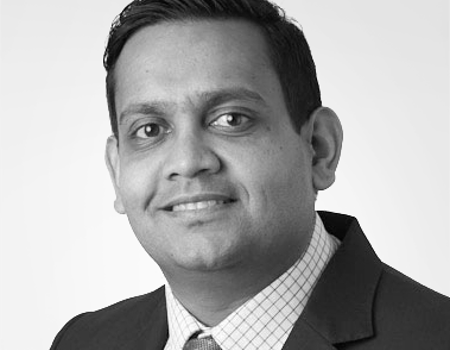
David Neal
David is IFM Investors' Chief Executive Officer, responsible for executing the firm's strategy and delivering strong results for IFM Investors' clients, shareholders and staff. David leads IFM's global business, with nine offices and four investment teams: Infrastructure, Debt Investments, Listed Equities and Private Equity.
Related articles

Private credit under pressure, but opportunities still exist




Beyond data centres: Could fibre optic networks bridge the AI divide?



Infrastructure: The times they are a-changin’