Private Markets 700 – 2026 research & trends
IFM Investors surveyed 700 global institutional investors for its annual Private Markets 700 (PM700) research.
Explore the findings to see how investors are balancing resilience and growth through more selective private markets access.
Download the full report
How investors’ priorities are evolving in 2026
Private markets are gaining strategic importance as investors navigate macroeconomic volatility.
Our research shows that investors increasingly see private markets as a way to build portfolio resilience, access long-term value creation and meet demand for more specialist solutions.
At a glance
- 53% Over half of investors think private markets investments improve diversification
- 1 in 10 Almost one in ten (9%) investors say their portfolios are vulnerable to economic shocks
- 44% Nearly half of investors say a lack of expertise limits them scaling investments in complex thematic areas
- 7 in 10 71% of investors think long-term megatrends like AI and the energy transition are essential for returns
“Investors still want growth, but they increasingly want resilience alongside it. They are looking at private markets as portfolio builders” – John Gee-Grant, Global Head of Global Client Solutions
Key findings: 2026 Private Markets 700 research
Investors are looking for more than simple access to private markets. They want specialist expertise and tailored solutions to help them respond to a more complex environment. Use the + icon to see the data behind each 2026 theme.
Investors are prioritising portfolio resilience
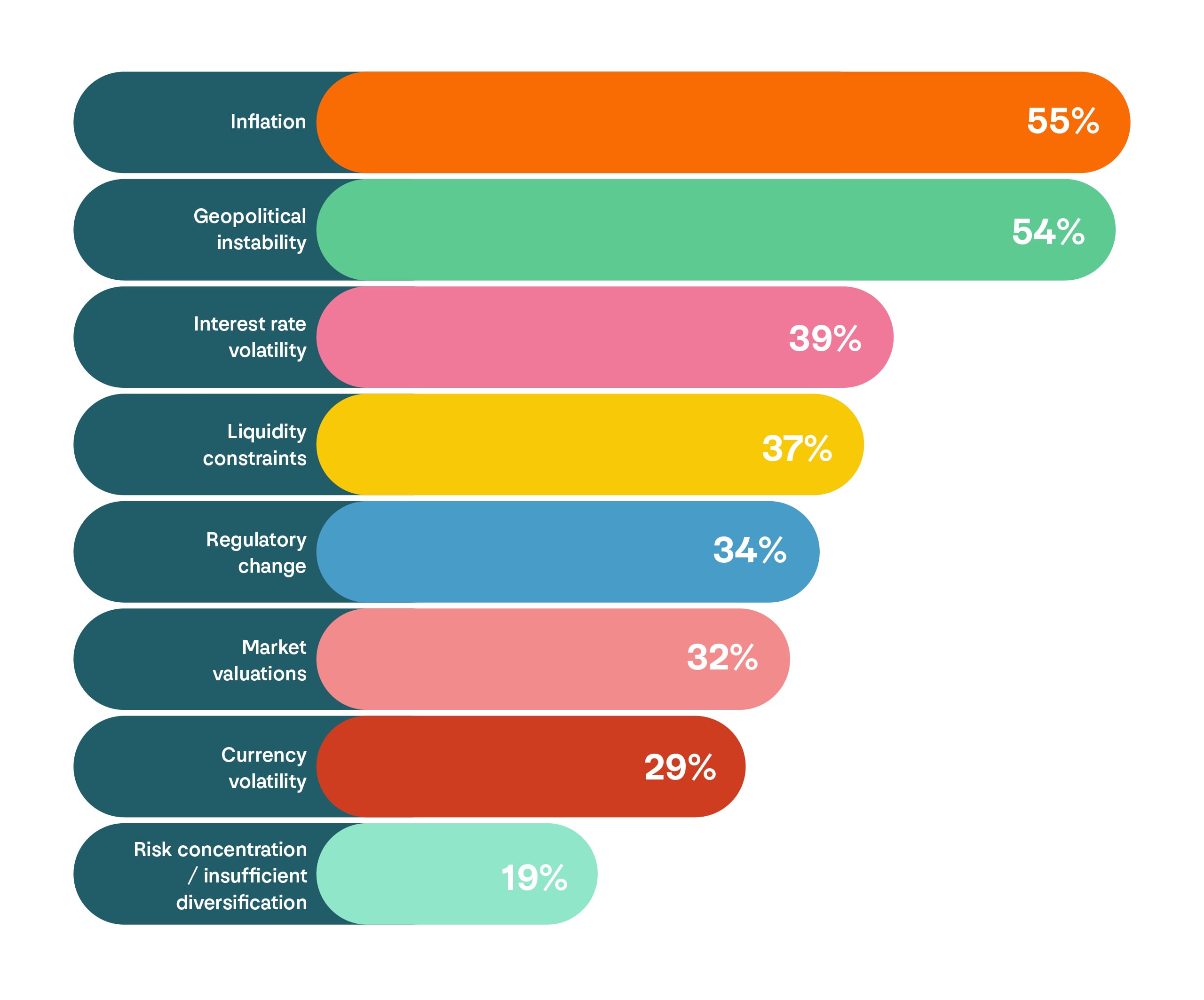
- Most investors say inflation (55%) and geopolitical instability (54%) are the leading risks on private market asset performance.
- Nearly one in 10 investors say their portfolios are vulnerable to economic shocks, and a further 29% believe their portfolios are only moderately resilient.
- Over half (53%) say they see private markets as a key means to improve their portfolio diversification and offset risk profiles or concentrations in sectors or geographies. Plus, 50% do so to improve their financial returns, while close to a quarter (23%) say private markets investments are a hedge against inflation.
Investors say inflation, geopolitical instability and interest rate volatility are the biggest risks to their portfolios

Source: IFM Investors/FT Longitude
Specialist access is becoming more important
-
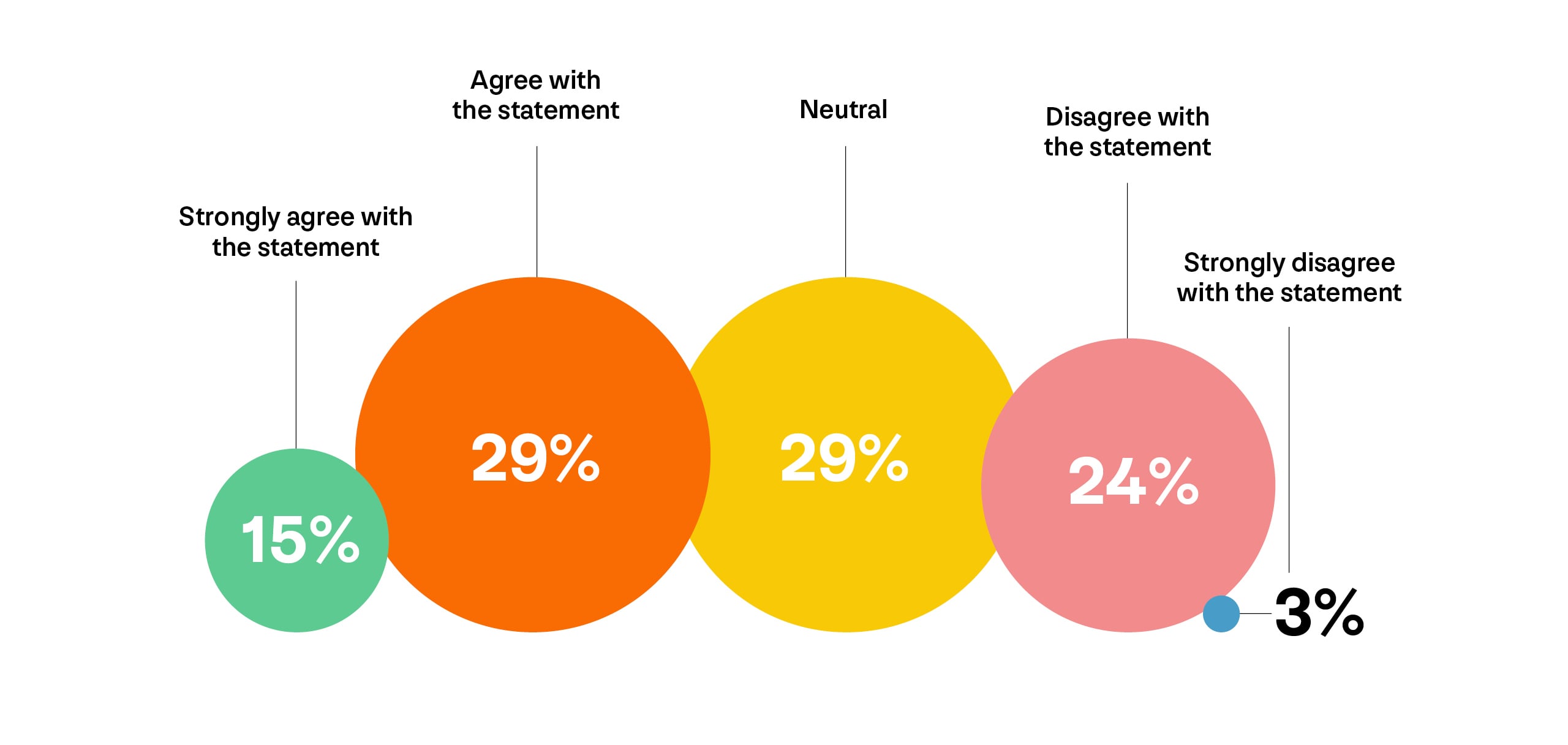
Investors are aware that they lack the specialist knowledge to take full advantage of private market possibilities. Nearly half (44%) say a lack of internal expertise limits them scaling complex thematic investments.
-
Investors are seeking tailored solutions or more direct investment access to private markets. We found that 33% of investors want more customised solutions, while 65% agree they are using more co- and secondary investments in private markets to improve their portfolio efficiency.
-
They are also keen on greater transparency to better understand how investments are being made. A third (35%) say they want more granular data on underlying exposures.
Many investors agree that a lack of internal expertise limits their ability to scale complex thematic investments

Source: IFM Investors/FT Longitude
Megatrends are now seen as essential for success
- Investors increasingly believe their long-term portfolio success will depend on their ability to access some of the key themes underpinning major capital investments. 71% say long-term megatrends like AI and the energy transition are essential for returns.
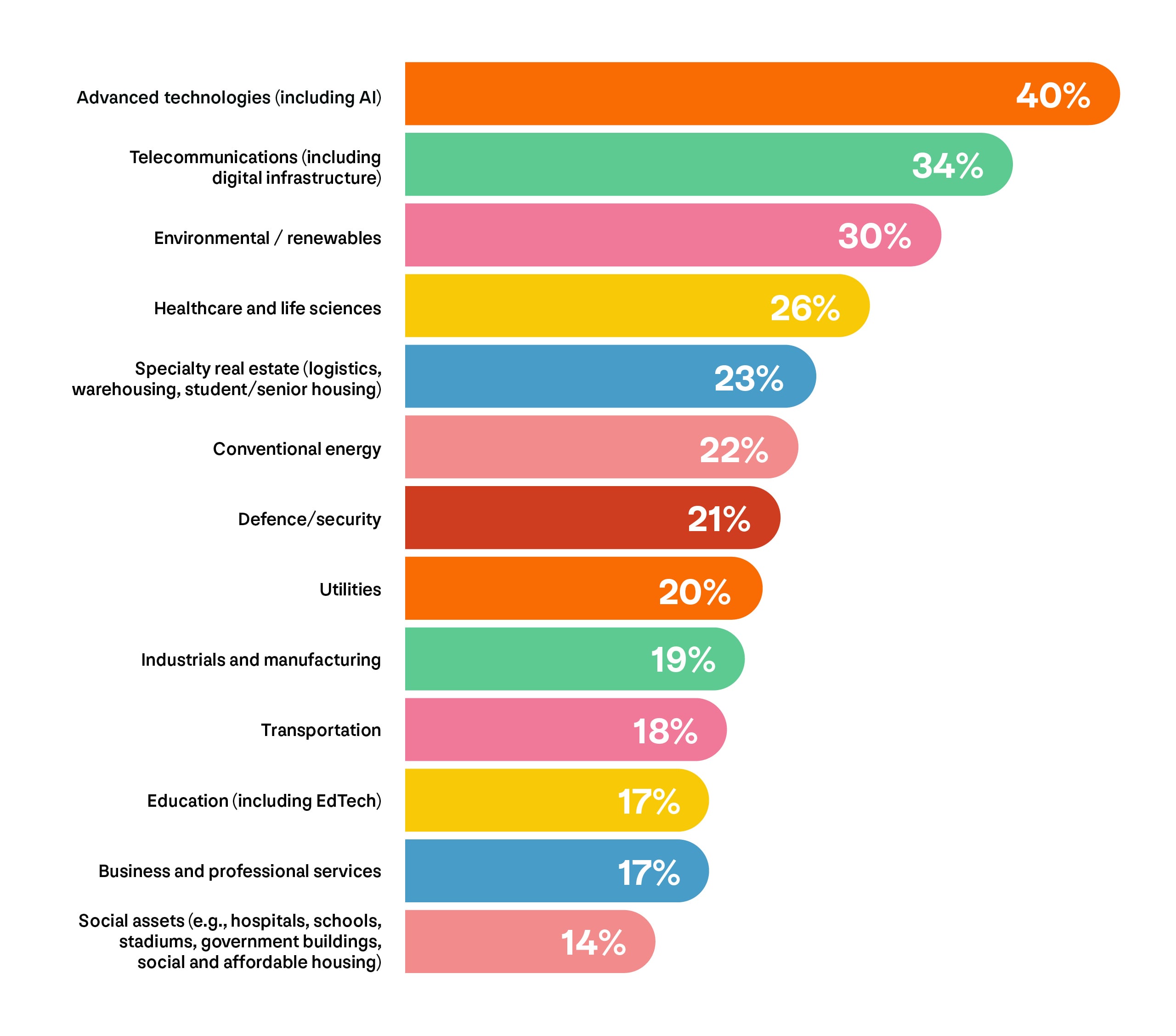
- Digital technology is particularly appealing among investors, with 40% pointing to advanced technologies such as AI as a top investing opportunity and 34% noting that telecoms (including digital infrastructure) is appealing.
- However, many investors also worry that too much capital is chasing these opportunities, which presents investing difficulties. We found that 62% of investors felt that inflows into popular themes are pressuring future returns.
Investors say that themes such as AI and the energy transition are the strongest investment opportunities

Source: IFM Investors/FT Longitude
Regional priorities are diverging
-
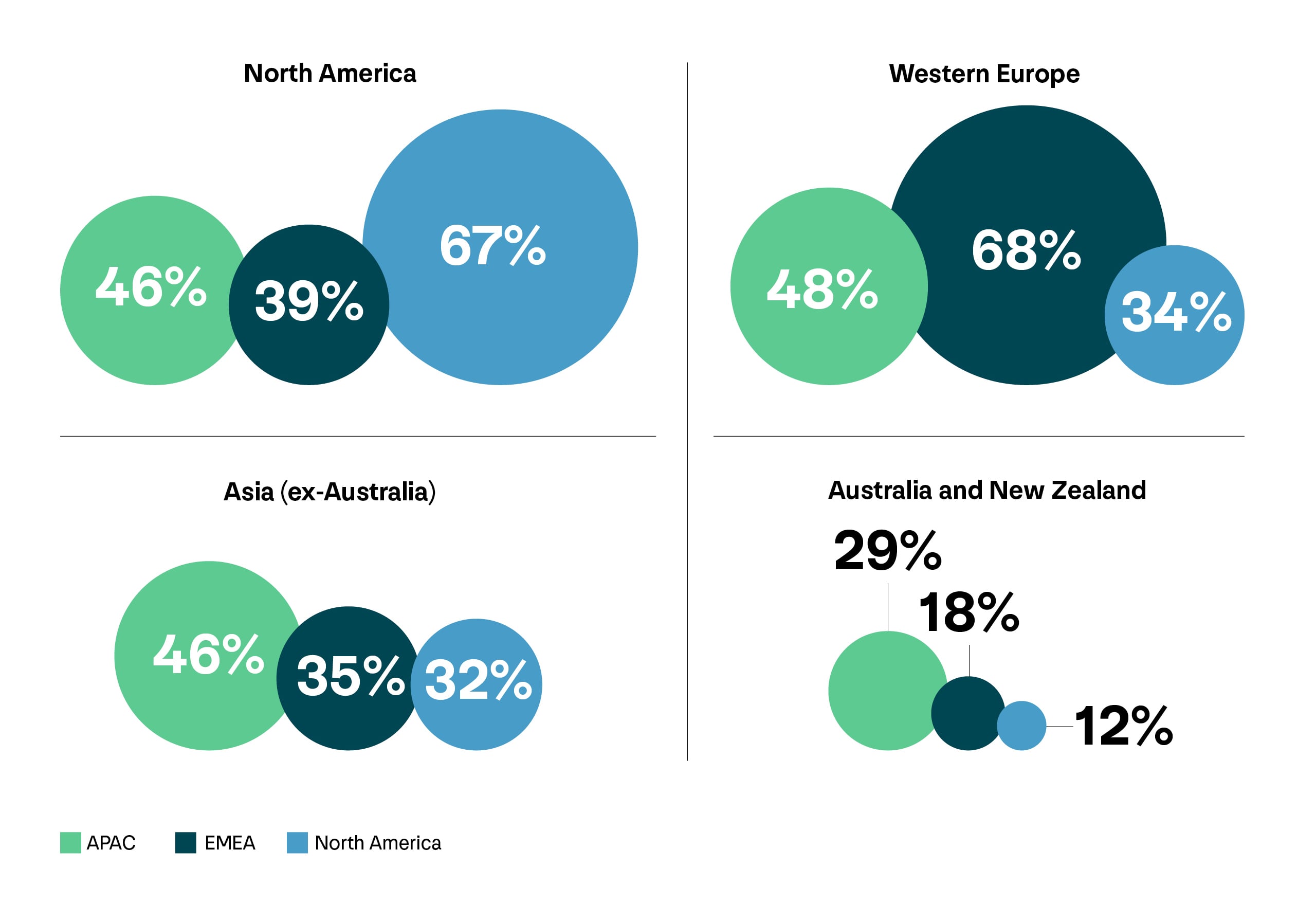
North American investors are keener on customised solutions than their peers, and more willing to look at conventional energy (28%) and defence investments (12%).
-
EMEA investors are strongly supportive of the energy transition (81%), and 76% say sustainability is key to private markets investing. They are also more focused on blended strategies.
-
Asia (ex-Australia) investors are very interested in infrastructure debt investing (61%), while over three-quarters (78%) believe AI, the energy transition and demographic change are essential for reaching return objectives.
-
Australia investors are particularly prepared to invest in private markets via globally diversified vehicles (59%). They are also especially focused on flexibility, with 68% saying greater liquidity and flexible redemption terms would catalyse more private markets investments.
North America and EMEA investors are very home-focused, unlike Asia and Australia

Source: IFM Investors/FT Longitude
Infrastructure equity has very strong support
-
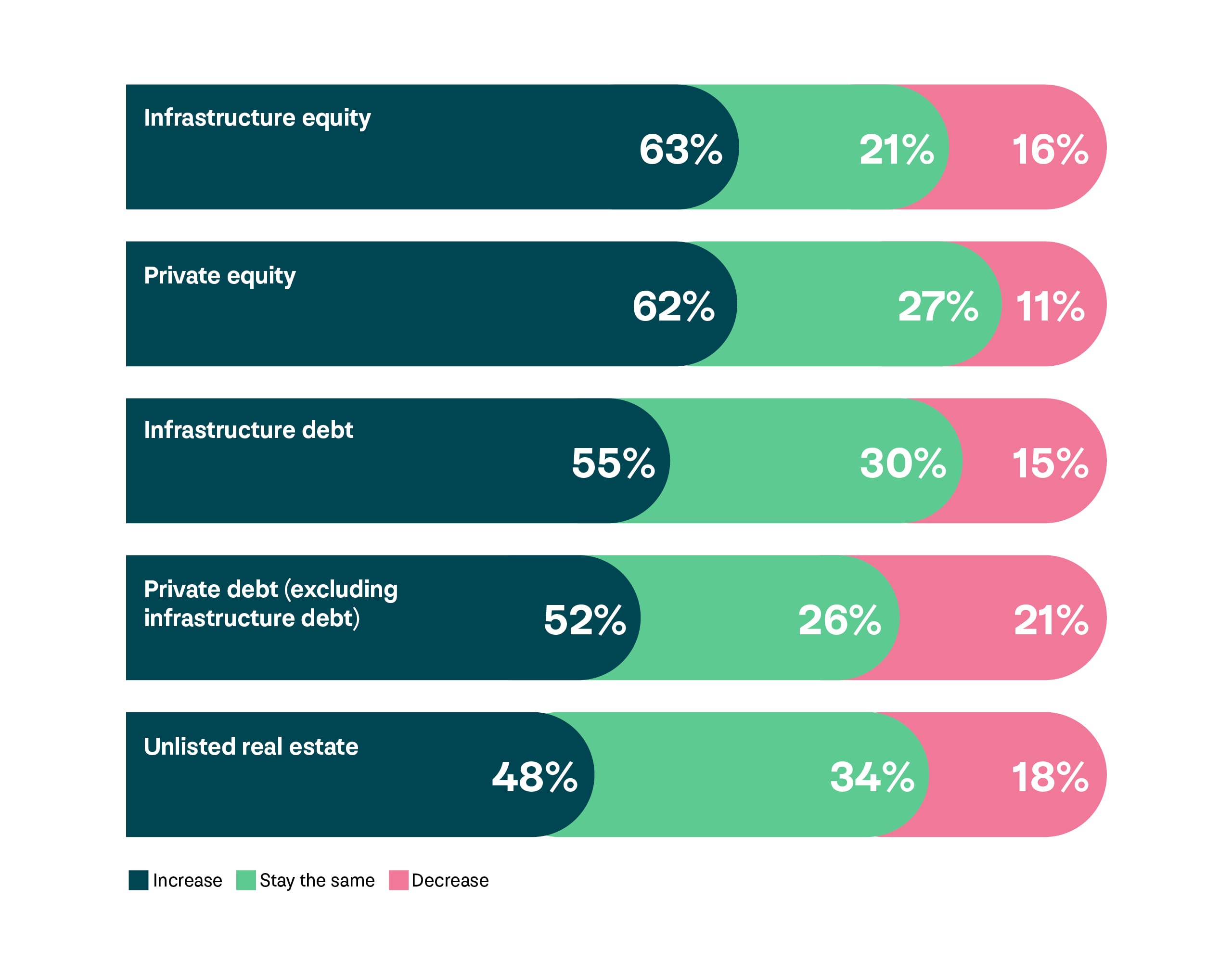
Infrastructure equity is the most appealing private markets asset class with investors as of 2026. Nearly two-thirds (63%) say they plan to raise infra equity allocations over the next three to five years.
-
The asset class is regarded as especially good at enabling access to key megatrend themes. 44% of investors raising infrastructure equity say they are doing so to access themes like energy transition and digitalisation.
-
Australia investors are particularly keen on infrastructure equity, with 75% saying they intend to raise their allocations in the asset class.
Nearly two-thirds of investors plan to increase their exposure to infrastructure equity and private equity

Due to rounding, percentages may not total exactly 100%.
Source: IFM Investors/FT Longitude
Energy transition investments remain appealing

-
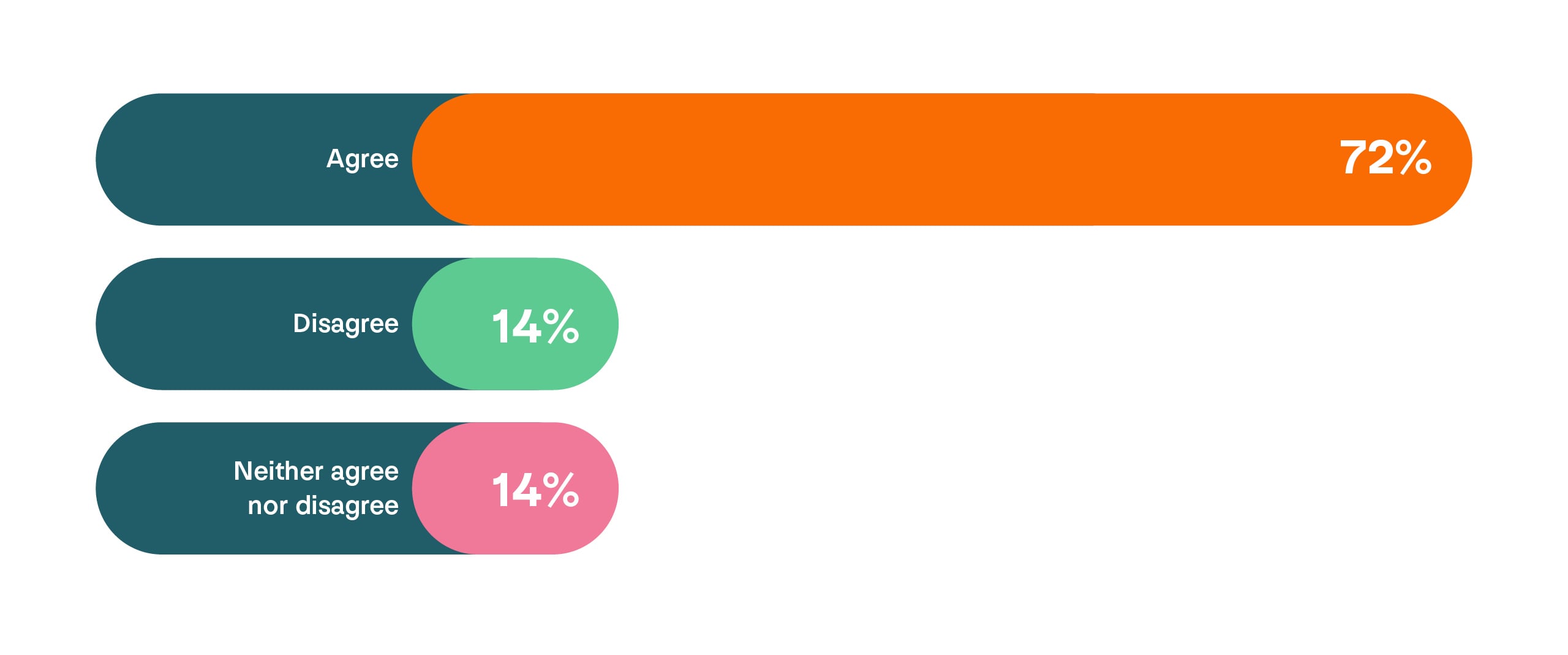
The energy transition and climate change are seen as areas that continue to offer great opportunity. 72% of investors agree that the energy transition offers long-term private market opportunities, and 69% say sustainability is key to private markets investing.
-
Almost one in three investors (32%) also believe the climate imperative is a top 3 megatrend that is set to impact private markets.
-
Nearly 1 in 4 investors (24%) say one of the top reasons they invest into private markets is to have a positive environmental or social impact.
Investors think the energy transition is central to private markets opportunities

Source: IFM Investors/FT Longitude


If you would like to learn more, download the research to see how investors are balancing resilience and growth through more selective private markets access.
Watch next
Transcript
John Gee-Grant: People understand that growth is the holy grail, but also want that resilience more. And maybe that's a factor with the macroeconomic and political environment getting more challenging.
Meg Wright: Today’s investors are feeling the pressure. The pressure to perform in volatile macroeconomic conditions. The pressure to balance diversification, financial returns and exposure to megatrends. And, ultimately, the pressure to ensure their portfolios remain resilient for the long term.
Now in its third year, the Private Markets 700 is a study of more than 700 asset owners, wealth managers and investment consultants. It tracks changes in global investment strategies and the outlook for private market investments.
In 2026, the results are telling: Investors want more from their private markets allocations than ever before.
First, they are grappling with the need for greater resilience. Nearly one in ten investors says that their portfolio is vulnerable to market shocks. And only one in five say their portfolio can perform consistently across economic conditions.
Could diversification be the key that unlocks resilience?
Miles Collins: My name's Miles Collins. I'm the chief investment officer for the University of Sydney's Endowment Fund. My view is that if you achieve a genuine and sensible level of diversification in an investment portfolio, then you should be able to manage that fairly consistently over time. And obviously there's some rebalancing along the way and you find new strategies and new ideas, but in reality, it shouldn't be something that you are chopping and changing and your strategy shouldn't be fluctuating too aggressively, frankly, from one decade to the next.
Meg Wright: So, what role do private markets play in resilient portfolio construction? And how are institutional investors approaching their allocations to maximise long-term success?
Luba Nikulina: Private market strategies always provided some degree of diversification if we think about real estate or private debt or infrastructure in particular. It's just the weight that investors, allocators put on this feature, the resilience that this diversification provides to portfolios, it has been increasing more recently.
I'm Luba Nikulina, chief strategy officer at IFM Investors.
There is also a feature that you can get exposure to something in private markets that you just cannot access in the listed public markets context. And this is where getting exposure to long-term themes is becoming much more interesting for investors as these themes become more pronounced.
John Gee-Grant: Diversification is always a good tool for portfolio resiliency. My point around factor exposure is the more diverse you are, the more likely you are to have exposures across a wide variety of factors.
Meg Wright: That’s John Gee-Grant, head of global client solutions at IFM Investors.
John says portfolio resilience relies on much more than just diversification…
John Gee-Grant: In many cases, people are investing in certain markets, but are exposed to very, very different risks that may not be consistent within those particular markets. Digital is the most obvious one where you can get exposure to digital through public and private, through infrastructure, through private equity, through property and many other asset classes.
So just investing in one of those doesn't give you necessarily resilience because you may be overexposed or indeed underexposed. Looking at the underlying exposures is probably more important to see how resilient you are across a total portfolio.
Deepa Bharadwaj: Investors are looking for investing in an asset class that not only will generate returns, but will also provide protection against some of the shocks that we are seeing right now, which relate to yet again, inflation.
Meg Wright: Meet Deepa Bharadwaj head of infrastructure for Europe at IFM Investors.
In Deepa’s words, investors are increasingly on the lookout for asset classes that will provide inflation resilience. This comes as more than half of investors rank inflation among their top portfolio risks. Many are turning to private markets to close this gap, and to infrastructure in particular – as Deepa explains.
Deepa Bharadwaj: We're talking about assets that provide essential services. It's those services that you and I will be utilising. They need to be available 24/7, we count on them. These are services that have inelastic demand. Which is when we talk about infrastructure resilience or investing in infrastructure resilience.
And we talk about inflation protection, over and above that, we will focus on investing in larger assets that have limited competition, dominant or leading positions that yet again provide that level of sort of, I would say defensiveness or sort of resilience.
Through post-COVID, we've had inflation, we've had the energy shock coming from Ukraine. Now, we've had the Middle East War. What you're seeing is the infrastructure's ability to withstand these shocks and investors yet again looking for that level of defensiveness in their portfolio.
Meg Wright: IFM’s PM700 study reveals that 47% of investors point to macroeconomic factors as the strongest force impacting their private market investments. And 54% say geopolitical instability among their biggest portfolio risks.
So how can investors ensure they are able to capitalise on new opportunities while maintaining the resilience they need in the face of uncertainty and high inflation?
Here’s IFM’s Luba Nikulina again.
Luba Nikulina: Geopolitics and inflation, they're related and that's why they do feature as top of mind for institutional investors, maybe geopolitics a bit more last year and macroeconomic risks and inflation in particular this year.
But many of the trends that we observe in the market, be it the reconfiguration of supply chains which is driven by geopolitical events or investment in the build out of AI capabilities, many of them are inflationary in nature. And so, as a result, it is quite clear why investors are thinking about how to protect their portfolios, because defending the purchasing power of the savings and the money that you have in the portfolio is a primary objective for asset allocators.
Meg Wright: The question remains: Has inflation changed the way investors think about resilience, or simply exposed factors that were already there?
Here’s the University of Sydney’s Miles Collins.
Miles Collins: Like most investors, we have been seriously and significantly outperforming our stated investment objective for longer than people can really remember. It's become the norm. But I think part of the reason for that is that obviously the nominal results in a very low interest rate environment meant that real returns looked fantastic, but I do think there's mean reversion in that.
My view is that being resilient in a higher inflation environment is really being very focused on meeting that objective and not expecting necessarily to outperform it too dramatically from here.
I think people are being perhaps surprised, myself included, that with this rise in interest rates that we've seen in recent times to try and counter inflation so far hasn't really damaged markets, which probably suggests that rates need to go up higher. I think inflation is probably with us for some time.
Meg Wright: Exposure to megatrends is a key driving force for increased private markets allocations. 71% of investors believe investing in megatrends will be essential to achieving their return objectives.
But experts warn it’s a balancing act.
Alongside any potential opportunities, investors must also understand their level of exposure and the associated risks – as Miles Collins explains.
Miles Collins: There's always a balance here because there does come a point where in a shock environment, you'd always prefer to be more resilient. But the reality is if you are too resilient in some respects, then you are simply not taking enough risk to get your returns on the other side of the equation. So, you've really got to try and get that balance right.
Meg Wright: Advanced technologies, AI and digital infrastructure are perceived to present the strongest investment opportunities.
But as IFM’s Luba Nikulina says, investors need to be mindful of not overexposing themselves.
Luba Nikulina: Investors do need to think about concentration because there is very significant concentration on everything related to AI in listed equities. And of course, within private markets, you also get exposure to the same theme through infrastructure and even through some of your private equity and debt investments. And even the real estate, if you think about that, because some investors will put data centres in real estate.
So transport, for example, if you look at the overall projected spend in infrastructure, transport in particular, the world needs to continue to move goods and people around, which means that we do need toll roads, ports, airports. And even on those assets, you can think about AI as an enabler because you can use AI techniques to help you manage traffic. Obviously, electric vehicles and self-driving vehicles are becoming increased in the future of the day.
So, there are many more interesting ways to invest your capital, which is not at the epicentre of the AI revolution where there is clearly significant concentration.
Meg Wright: And while investors have their eyes fixed firmly on higher performance, this year’s study shows a tempering of expectations for private markets returns – notably for private equity and infrastructure equity.
Could this be a reflection of the asset class maturing? Here’s IFM’s John Gee-Grant again.
John Gee-Grant: I think the factors around inflation hedging, looking for private markets for diversification is looking at private markets as portfolio builders rather than just return chasers. I just think those themes are really interesting and show an increasing maturity in the market, but also the stage of the cycle we're in.
Meg Wright: Many investors see private markets as the best source of exposure to structural growth opportunities.
Infrastructure in particular sits at the intersection of growth and resilience. Over the next three to five years, 63% of investors plan to increase their allocations to infrastructure equity, and 55% to infrastructure debt.
Luba Nikulina: Private markets were historically dominated by private equity, but infrastructure has been growing.
Obviously, not all infrastructure assets are created equal and this is why the selectivity is becoming really important for asset allocators just to ensure that they get the right asset manager and pick up the right strategies. But there is definitely an underlying theme and trend there that the world, society needs more infrastructure.
So there is a requirement to build new assets and then also assets that are already in the ground. Many of them need to decarbonize, to digitise. So, this requires additional CapEx and all this stimulates growth and gives investors an opportunity to get additional returns in addition to resilience.
Meg Wright: As AI accelerates demand for digital infrastructure, how is this reshaping infrastructure investment opportunities? IFM’s Deepa Bharadwaj explains.
Deepa Bharadwaj: So, the rise of AI usage has fueled the convergence of data and energy. But it's also about land and water. We're seeing this full convergence. The biggest bottleneck right now is turning out to be power.
So that kind of convergence, when you think about investing in data centres or in digital infrastructures, thinking about all of those linkages and their interactions and making sure that your investment has full coverage across those areas.
And then, that gets back to your fundamental investing principle, which is you have to buy well. So when you buy well, it's not only a question of thinking about buying at the right entry price, but it's also thinking about making sure that you have all of your connectivity into power, you have the sources, you have access to the land, you have access to water, you've thought about waste heat and so on. Because as infrastructure investors into data centres and across, a critical element of investing is also your social licence.
Meg Wright: These converging trends are also likely to drive long-term opportunities in other areas of the value chain. Miles Collins explains.
Miles Collins: Thinking about the diversification of where these trends are heading, one would think that over time, this infrastructure stage that we're going through at the moment where you've essentially got these very large organisations competing to be potentially a winner in that AI infrastructure layer, we're probably a bit more interested in what gets built on top of that in due course. And so, we're looking to make sure that we are reasonably well allocated to that next phase of growth and being prepared to wait for some of that.
One of the things that we have done in this year is to really step up our exposure to natural resources, mainly because we think not just this AI thematic, but the geopolitics that you've described and also to some extent the defence dynamic, the electrification dynamic. There's a whole range of megatrends that seem to be more than emerging that are going to require greater exposure to raw materials.
And part of our concern with our exposure prior to making that allocation was that whilst we're sitting in a commodities-based country, maybe don't have the diversification of commodities in this country that adequately meets those broader themes. And so, we wanted to expand that out and take a more global approach to our exposure there.
Meg Wright: The opportunities for growth are clearly there. So, how can today’s investors ensure they are selecting the right themes to build the long-term resilience they need?
Here’s John Gee-Grant again.
John Gee-Grant: Tech investing, particularly, has supported the US economy and the day doesn't go by without another story, mainly a success story, and it's popular with investors. But I know 62% of respondents said strong inflows into popular themes are putting pressure on future returns. Whether that's crowding, whether that's the blurring of the exposures, it does suggest investors want exposure to AI and data centres and renewables, but probably more selectively.
But there are opportunities all around. So, it could support the infrastructure partners of tech companies, for instance, supporting businesses. A bit like people selling picks and shovels could turn a profit, whatever the fortunes of the miner, there's a similar thing in tech. There are a lot of people selling into that business that could have a much more resilient return profile and less risky.
Luba Nikulina: I think selectivity is becoming the word of the day for asset allocators. They do need to become very mindful in the way they choose their partners.
Meg Wright: That’s IFM’s Luba Nikulina speaking. And she’s right: selectivity does matter – not only when it comes to deciding where to invest, but in deciding who to trust along the way.
44% of investors say that a lack of internal expertise limits their ability to scale investments in complex thematic areas. And at least a third demand granular data and more customised solutions.
All this points to the need for better partnerships. Here’s IFM’s John Gee-Grant to explain.
John Gee-Grant: I think there's a few factors to take into account and a lot of them are to do with governance, but the first one is a lack of in-house expertise. Now, there's no doubt the bigger asset owners have got more of that expertise. It's not just the size aspect, but that tends to drive the comfort in, or the prevention of, those benefits materialising.
Meg Wright: The majority of investors plan to increase their exposure to private asset classes, but they also want more from these investments. Higher returns, more diversification, better portfolio resilience.
So, what’s holding them back? Does a lack of specialist knowledge risk blocking investors from accessing the biggest thematic opportunities? We put this question to Luba.
Luba Nikulina: Private markets have always been at the top end of the governance chain in the institutional investment world. It does require specialist knowledge and resources. Private markets is not something that you can manage on a quarterly meeting agenda. You do need to have capacity to be able to continuously take decisions and ensure that you invest in a way that allows you to achieve your objectives. But more recently, private markets themselves have become much more sophisticated.
Meg Wright: With the vast majority of investors demonstrating interest in co-investments or direct investments, execution will require both skills and capacity.
Luba Nikulina: And for asset managers themselves, having capabilities across different strategies is really important, but I would probably say that the most important capability is to be able to understand your client best, not only within the particular strategy that you operate, but rather what are overall objectives of your client and how they're changing and evolving and how you, as an asset manager and as their strategic partner, can continue to evolve your own capabilities to be able to continue to help your clients deliver on their objectives.
Meg Wright: To succeed in this context, partnerships need to be about building strategic, trusted relationships, as Miles Collins explains.
Miles Collins: I think it's useful for us to build what we hope to be long-term relationships with the external investment fund management community, but frankly, to have the flexibility to be able to pivot and change those relationships as and when we need to. That might be just a function of shifting strategy with the same manager and trying to adapt and maybe shift structures with existing relationships, which frankly would always be our preference because building trusted relationships is a really core part of what we do.
John Gee-Grant: I think education and partnership with all asset owners is very important. So I suppose there are different levels of complexity that people will require in terms of getting comfort with a particular asset class.
I suppose number one is calibrating our messaging and our content to the appropriate audience in the right way. We are definitely working with more mid-size asset owners around the world to help complement their in-house teams.
I think open-ended funds offer long-term return potential and less risk of volatility. For some of the smaller and mid-sized clients that probably haven't been exposed to infrastructure or private markets before, the style of fund helps them get on that journey, if you like, because they have comfort around the liquidity and the open-ended nature.
One thing I haven't mentioned is around the role of the investment consultant community and advisors, and that is clearly picking up in the private market arena. So yes, small and medium-sized clients will be getting more advice now from investment consultants and others who have broader expertise in terms of manager selection or asset selection.
Meg Wright: There’s no doubt about it: today’s investors need to be disciplined and adaptable in the face of macroeconomic uncertainty.
Private markets continue to give investors new inroads and opportunities to benefit from global megatrends such as AI and the energy transition.
Perhaps most importantly, these assets offer investors a way to balance their twin priorities: building resilience and improving returns.
Investor return expectations across private market asset classes in 2026
In 2026, private markets are seeing net growth in ambition to invest into all asset classes. Investors continue to expect better returns from equity-style categories such as private equity and infrastructure equity, but only narrowly ahead of their expectations for private debt and infrastructure debt returns. This may suggest a more defensive mindset, in line with concerns about macroeconomic and geopolitical risks.
Regional views on private markets in 2026
The 2026 research highlights how investors in different regions are approaching private markets – and where their priorities are starting to diverge.
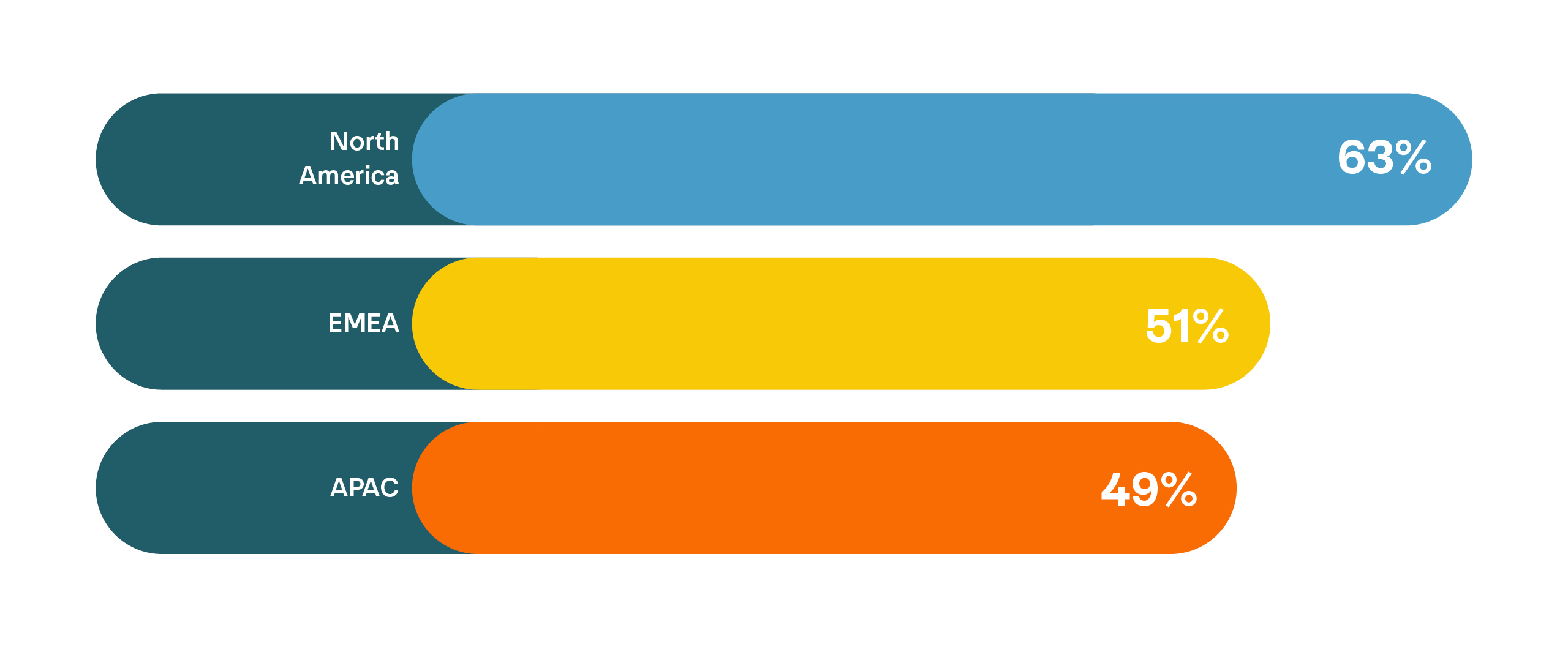
- North American investors are the most concerned about inflation, with 63% placing it among their top three portfolio risks. A lower perceived level of local geopolitical risk (49%) may also help to explain why two-thirds (67%) are prioritising North America for private markets investments.
-
Customised solutions for private markets investing are a priority, with 67% saying solutions such as segregated mandates or completion portfolios would catalyse them to invest more into private markets.
- North American investors are more likely than their regional peers to prioritise private markets investments into conventional energy (28%) and defence (12%).
North American investors are the most concerned that inflation is a leading risk on their portfolios
Source: IFM Investors/FT Longitude survey
- European, Middle Eastern and African investors continue to be the most assertive about the energy transition, renewables and climate change-related investing. 81% say the energy transition is a source of long-term opportunities, while 38% believe environmental/renewables present a top three private markets opportunity.
- They are the most interested in using closed-ended pooled funds. 41% identify regional or specialist funds of this type and 44% favouring diversified funds of this type to access high-quality private markets investments.
- They are the most focused on smoothing returns during inflation cycles. 49% say their priority is to perform strongly during periods of high inflation, and in exchange to see solid performance in normal conditions.
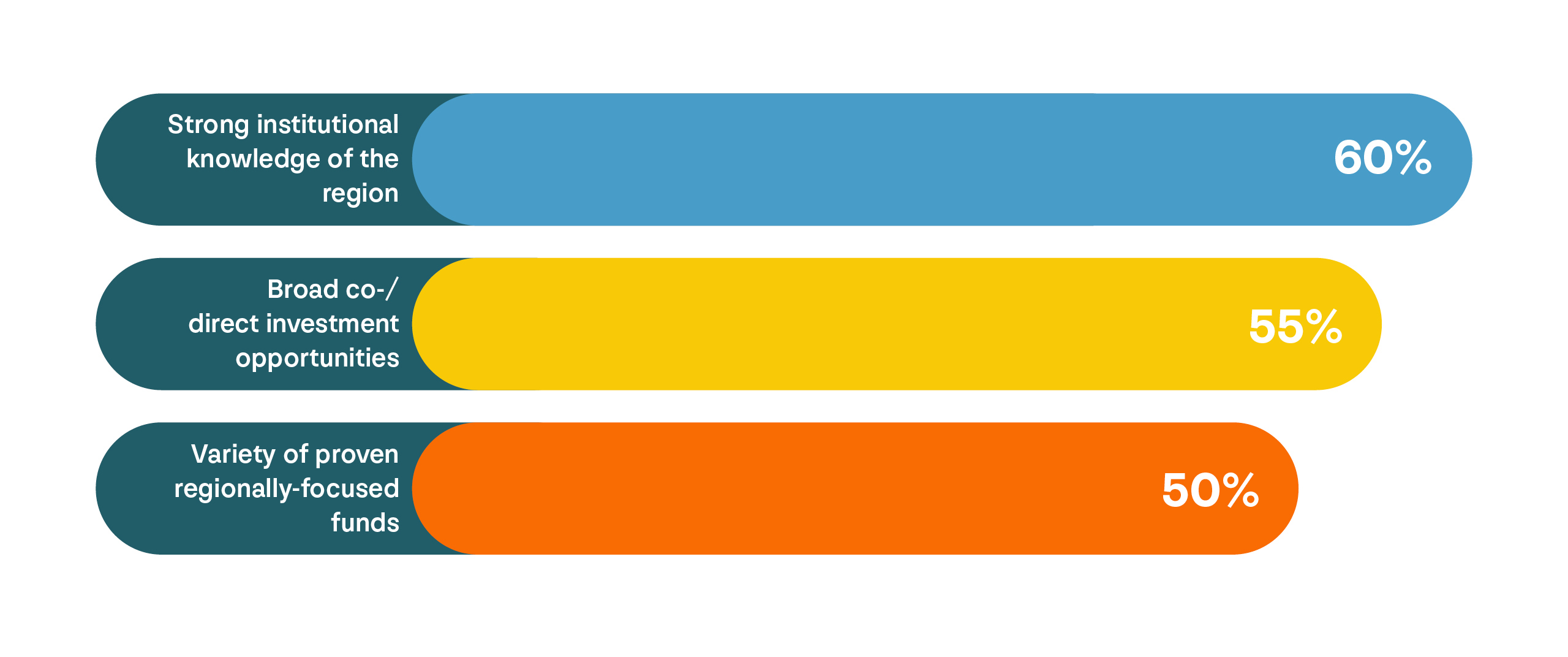
EMEA investors focus on Western Europe because of their institutional knowledge of the region and its co- and direct investment opportunities
Source: IFM Investors/FT Longitude
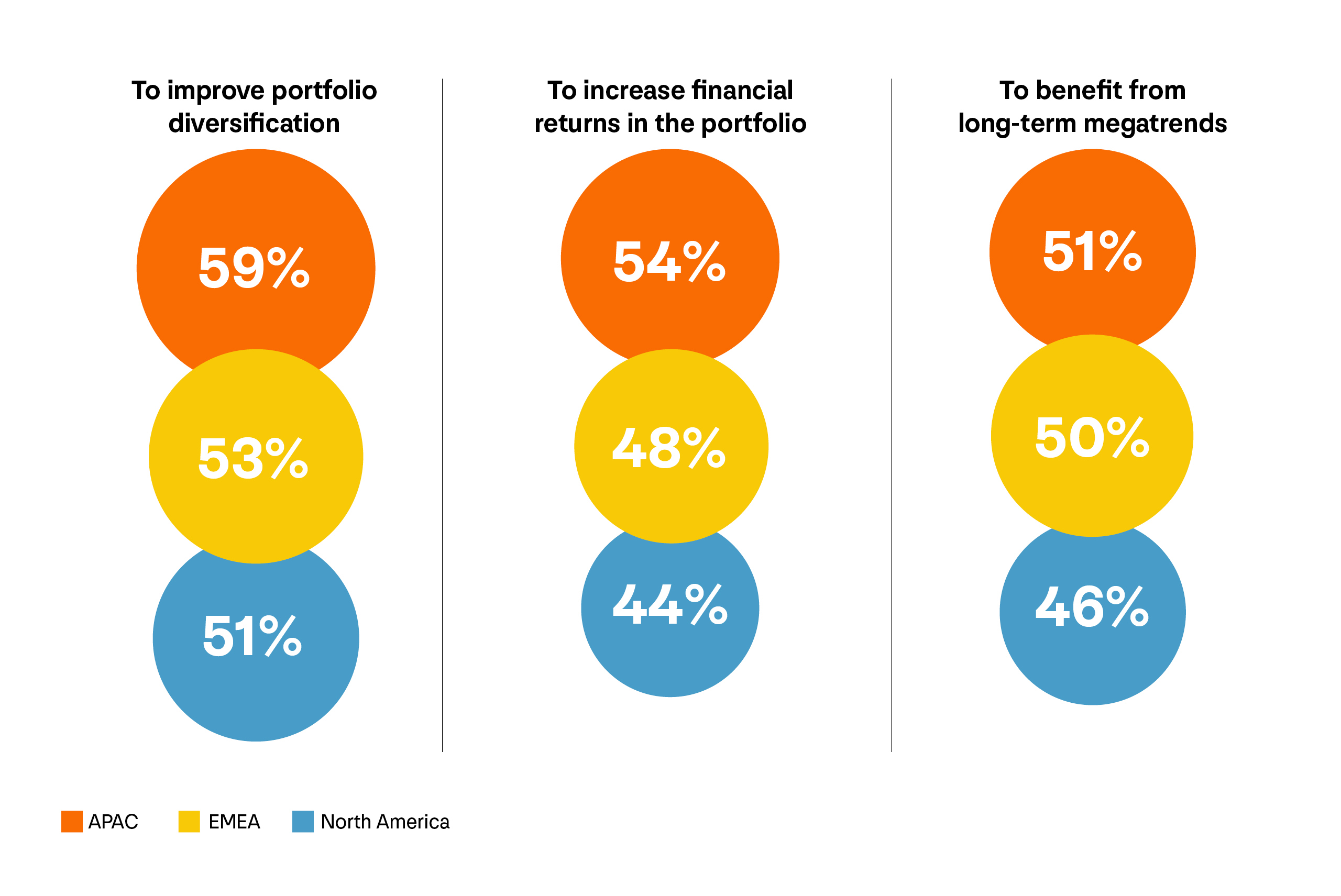
- Asia-Pacific investors are most interested in infrastructure opportunities, with 75% looking to increase allocation to infrastructure equity and 59% aiming to increase infrastructure debt investments over three to five years. They also favour technology investing; 44% highlight the rise of new technologies and greater demand for power as a top three megatrend.
- They are the least home-biased in terms of their regional investment preferences, and half (50%) focus private market investments through globally diversified vehicles.
- They take the most varied approach to improve their inflation resilience, allocating to inflation-linked assets (43%), holding higher cash or liquid reserves (38%) and diversifying across asset classes (37%).
APAC investors have diversification as their top reason for investing in private markets
Source: IFM Investors/FT Longitude survey
Frequently asked questions about Private Markets 700 research
Learn the answers to some common questions about institutional investor engagement with private market assets.
Investors believe private market asset classes offer them portfolio diversification (53%) and resilience to inflation (35%), and 71% see exposure to megatrends as essential for returns. Infrastructure equity in particular is seen to offer exposure to long-term themes such as the energy transition, digitalisation, social themes (44%).
Investors find that advanced technology (including artificial intelligence) and telecoms (including digital infrastructure) are two of the top three areas for private market investing opportunities in 2026 (respectively receiving 40% and 34% support). The third is environmental/renewables (30%).
Yes, many indicate they will. While almost two-thirds (63%) of investors say infrastructure equity is the private markets asset class they are most likely to invest more into over the next three to five years, over half (55%) said they intend to add to their infrastructure debt allocations.
Yes, it is. Almost three-quarters (72%) of investors say the energy transition offers long-term private market opportunities. This is especially strong in EMEA, where four-fifths (81%) of investors see the energy transition as a major opportunity.
A total of 700 institutional investors participated in the survey in May and June 2026. This was comprised of asset owners (38%), insurance companies (27%), wealth managers (21%) and consultants (14%).

Access the 2026 Private Markets 700 research
Read IFM Investors’ full 2026 Private Markets 700 research
Private markets remain an important part of institutional portfolio construction, but investors are becoming more selective about how and where they allocate.
Explore how 700 global institutional investors are seeking to build resilience, gain access to long-term structural trends and position portfolios for the years ahead.
Join private markets experts for a webinar
Explore the market forces behind the data
Join us this November for an exclusive webinar exploring the PM700 findings in more detail. We’ll discuss what the research could mean for the role of private markets within investment portfolios.
Explore the market forces behind the data
Join us this November for an exclusive webinar exploring the PM700 findings in more detail. We’ll discuss what the research could mean for the role of private markets within investment portfolios.

Contact us
Our North American Client Solutions team
If you'd like to discuss the PM700 findings or learn more about IFM's investment capabilities, our team would be pleased to help.
114 West 47th Street, 19th Floor, New York NY 10036, United States of America
Tel: +1 212 784 2260